Carbon Fiber vs Fiberglass Kayak Paddles: Which Should You Buy?
As an Amazon Associate we earn from qualifying purchases. Links on this page are affiliate links.
When you compare a carbon fiber vs fiberglass kayak paddle, you look at material balance and performance. Both the Hornet Watersports and Wilderness Systems Pungo Glass offer adjustable shafts and fiberglass blades. They share a composite shaft mix of carbon and fiberglass. The main difference lies in weight and specific length ranges. You need to check the specs to see which setup fits your kayak and paddling style best.
Key differences
| Aspect | Hornet Watersports 230-240cm Fiberglass Kayak Paddle | Wilderness Systems Pungo Glass Adjustable Paddle |
|---|---|---|
| Blade Material | Fiberglass | Fiberglass composite |
| Weight | 26 oz | not listed |
| Length Range | 90.5-94.5 in (230-240 cm) | 220-240 cm |
| Shaft Material | Light carbon fiber and fiberglass | 50% carbon/50% fiberglass |
| Blade Shape | Dihedral | not listed |
Which one should you choose?
Choose Hornet Watersports 230-240cm Fiberglass Kayak Paddle if
- You want a lighter paddle at 26 oz for easier transport
- You prefer a dihedral blade shape for efficient water pull
- You need a midsize blade for touring or fishing
Choose Wilderness Systems Pungo Glass Adjustable Paddle if
- You prefer a standardized 220 cm base length
- You want a paddle explicitly designed for Wilderness Systems kayaks
- You are looking for a specific Galaxy color option
Verdict: Choose the Hornet Watersports model if you prioritize a lighter weight and specific blade shape. Pick the Wilderness Systems Pungo Glass if you want a paddle tailored for specific kayak brands. Both offer similar shaft materials and adjustable lengths for general use.
Carbon vs Fiberglass Paddle Comparison
blade material
Both paddles use fiberglass for the blade, but the construction details differ. The Hornet Watersports paddle features a fiberglass blade with a reinforced backface for durability and a sleek look. It also uses a dihedral shape to pull water efficiently. The Wilderness Systems Pungo Glass uses a fiberglass composite blade. This composite build aims to reduce flutter and fatigue during long paddling sessions. While both rely on fiberglass, the Hornet highlights its reinforced design for maximum durability, whereas the Pungo emphasizes a composite blend for a smoother, more sustainable power stroke without flutter.
shaft composition
The shaft materials are nearly identical in composition. The Hornet Watersports paddle shaft is a mix of light carbon fiber and fiberglass. This combination provides an optimal flex for various paddling styles, from leisurely rides to hard workouts. The Wilderness Systems Pungo Glass shaft is explicitly described as 50% carbon and 50% fiberglass. Both paddles offer a balanced flex profile by blending the stiffness of carbon with the resilience of fiberglass. This shared material strategy ensures that neither paddle feels overly rigid or too soft, providing a consistent feel for the paddler in both cases.
adjustable length
Both paddles offer adjustable lengths to fit different kayak sizes and paddler preferences. The Hornet Watersports paddle has a base length of 90.5 inches (230 cm) and extends to 94.5 inches (240 cm). The Wilderness Systems Pungo Glass starts at 220 cm and expands to 240 cm. The Pungo offers a slightly wider range of adjustment starting from a shorter minimum length, which may benefit smaller kayaks or paddlers. The Hornet starts at a slightly longer base length. Both mechanisms allow you to customize the reach, ensuring a comfortable stroke regardless of your specific setup.
blade feathering
The Hornet Watersports paddle provides specific controls for blade feathering. You can adjust the blade angle from 0 to 60 degrees and set feathering in increments of 15 degrees. This allows for precise customization of your stroke angle. The Wilderness Systems Pungo Glass data does not list specific feathering increments or angle ranges. It is described as adjustable, but without the detailed degree specifications found in the Hornet. If you prefer fine-tuning your feathering angle for wind conditions or personal comfort, the Hornet offers more explicit control options based on the provided specifications.
weight and transport
The Hornet Watersports paddle weighs 26 oz and breaks down into two parts for easy transport and storage. This feature is explicitly highlighted for convenience. The Wilderness Systems Pungo Glass data does not list a specific weight or mention a breakdown design for transport. While both are likely portable, the Hornet confirms its lightweight nature and modular construction. For users who prioritize easy storage in small vehicles or frequent travel, the Hornet’s explicit two-part breakdown and known weight offer a clear advantage in convenience and logistics.
Which Kayak Paddle Should You Choose?
Touring paddler needing precise blade control
The Hornet Watersports paddle offers a dihedral blade shape designed to pull water efficiently. Its adjustable ferrule allows blade feathering in 15-degree increments, giving you fine-tuned control. The 90.5-inch base length suits standard touring needs, while the extension to 94.5 inches accommodates taller kayaks or larger paddlers without sacrificing leverage.
Budget-conscious recreational kayaker
The Wilderness Systems Pungo Glass provides a fiberglass composite blade and a 50/50 carbon-fiberglass shaft for durability at a lower entry point. Its adjustable length spans 220 to 240 cm, fitting a wide range of kayak sizes. This setup reduces flutter and fatigue, making it a practical choice for casual touring.
Angler wanting lightweight transportability
Weighing just 26 oz, this paddle is light enough for long fishing sessions. It breaks down into two parts, simplifying storage in tight kayak compartments. The midsize blade offers a balance of power and ease for fishing, while the included drip rings keep your hands dry during extended use on the water.
Quick picks
| # | Product | Best for | Price |
|---|---|---|---|
| 1 | Hornet Watersports 230-240cm Fiberglass Kayak Paddle | Touring and fishing paddlers seeking adjustability | Check price of Hornet Watersports 230-240cm Fiberglass Kayak Paddle on Amazon |
| 2 | Wilderness Systems Pungo Glass Adjustable Paddle | Touring paddlers needing adjustable length | Check price of Wilderness Systems Pungo Glass Adjustable Paddle on Amazon |
The products compared

Hornet Watersports 230-240cm Fiberglass Kayak Paddle
Best for: Touring and fishing paddlers seeking adjustability
- Blade Material
- Carbon Fiber (what this guide is about)
- Shaft Material
- Carbon fiber and fiberglass
- Shaft Type
- Straight
- Length
- 90.5-94.5 in (230-240 cm)
- Blade Shape
- Dihedral
- Blade Size
- Midsize
View on Amazon: Hornet Watersports 230-240cm Fiberglass Kayak Paddle Affiliate link
The Hornet Watersports SUVELAM is a fiberglass kayak paddle with a carbon-fiber reinforced shaft. It weighs 26 oz and features a midsize dihedral blade. The shaft length adjusts from 90.5 to 94.5 inches, allowing for customizable feathering angles between 0 and 60 degrees. This setup suits touring, fishing, and recreational paddlers who want a durable, lightweight option that breaks down for easy transport.
Pros
- Fiberglass blade with a carbon-fiber and fiberglass shaft for optimal flex
- Adjustable shaft length from 90.5 to 94.5 inches
- Midsize dihedral blade shape for efficient water pull
- Lightweight at 26 oz and breaks down into two parts
Cons
- Blade material is fiberglass, not carbon fiber
- Shaft material is a composite mix, not pure carbon
- Includes only standard drip rings with no additional accessories
Good fit if
- You prefer a fiberglass blade for durability and cost efficiency
- You need an adjustable shaft length to match your height
- You want a paddle that breaks down for storage
Skip if
- You require a pure carbon fiber shaft for maximum stiffness
- You need a fixed-length paddle for a simpler setup
- You prefer a larger blade size for high-power strokes
Verdict: Hornet Watersports SUVELAM Fiberglass Paddle offers a balanced mix of durability and adjustability for paddlers who prioritize value over pure carbon performance. It fits those who need a versatile tool for touring and fishing without the premium weight of full carbon construction.
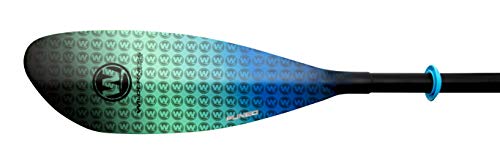
Wilderness Systems Pungo Glass Adjustable Paddle
Best for: Touring paddlers needing adjustable length
- Blade Material
- Fiberglass (what this guide is about)
- Shaft Material
- 50% carbon/50% fiberglass
- Length
- 220-240 cm
- Use
- Recreation, touring
- Ferrule Type
- Adjustable
- Included Accessories
- Paddle
View on Amazon: Wilderness Systems Pungo Glass Adjustable Paddle Affiliate link
This paddle blends a fiberglass composite blade with a 50% carbon and 50% fiberglass shaft. The adjustable length runs from 220 cm to 240 cm. You get a durable build that reduces fatigue during long trips. It fits well for recreation and touring. The 8-inch blade width offers steady power. This setup balances weight and stiffness for steady paddling.
Pros
- Fiberglass composite blade reduces flutter
- 50% carbon/50% fiberglass shaft balances weight and strength
- Adjustable length from 220 cm to 240 cm
- 8-inch blade width provides steady power
Cons
- Blade material is fiberglass, not full carbon fiber
- Shaft is only 50% carbon, not full carbon
- No feathering angle adjustment listed in specs
Good fit if
- You want a durable fiberglass blade for touring
- You need an adjustable length for different boat sizes
- You prefer a hybrid shaft for balanced weight
Skip if
- You require full carbon fiber for minimal weight
- You need a fixed-length paddle for maximum stiffness
- You want a feathering mechanism for wrist relief
Verdict: Wilderness Systems Pungo Glass offers a balanced hybrid shaft and adjustable length. It suits paddlers who prioritize durability and adjustability over the absolute lightness of full carbon fiber.
Specifications side by side
| Spec | Hornet Watersports 230-240cm Fiberglass Kayak Paddle | Wilderness Systems Pungo Glass Adjustable Paddle |
|---|---|---|
| Blade Material | Fiberglass | Fiberglass composite |
| Shaft Material | Carbon fiber and fiberglass | 50% carbon/50% fiberglass |
| Shaft Type | Straight | not stated |
| Length | 90.5-94.5 in (230-240 cm) | 220-240 cm |
| Blade Shape | Dihedral | not stated |
| Blade Size | Midsize | not stated |
| Weight | 26 oz | not stated |
| Ferrule Type | 0-60° blade angle, 15° feathering | not stated |
| Use | Touring, fishing, recreation | Recreation, touring |
| Propulsion | Oars | not stated |
| Included Accessories | Paddle | Paddle |
| Dimensions | not stated | 95 × 8 × 1 inches |
| Size | Standard | 220-240 cm |
| Color | Blue Scales | Galaxy |
| Model | SUVELAM | 8070206 |
Frequently asked questions
Is a fiberglass paddle heavier than carbon fiber?
Yes, fiberglass paddles are generally heavier. The Hornet Watersports and Wilderness Systems models use composite shafts with fiberglass blades. This construction adds mass compared to full carbon options. You trade some weight for increased durability and a lower cost profile. It is a practical choice for long touring sessions where stiffness matters more than minimal weight.
Do fiberglass paddles flex more than carbon?
Fiberglass blades offer more flex than rigid carbon fiber. Both listed paddles use fiberglass for the blade material. This flex can absorb shock during high-angle strokes. The Hornet Watersports model includes a reinforced backface for added strength. You get a smoother feel that reduces arm fatigue during extended paddling trips on the water.
Can you adjust the length of a fiberglass paddle?
Yes, many fiberglass paddles feature adjustable ferrules. Both the Hornet Watersports and Wilderness Systems models include this feature. The Wilderness Systems paddle adjusts between 220 and 240 cm. This allows you to tailor the length to your height and stroke style. It provides versatility for different kayak types and paddling conditions.
Are fiberglass blades durable enough for fishing?
Fiberglass blades are quite durable for general use. The Hornet Watersports paddle is rated for fishing and touring. It features a reinforced backface to withstand impacts. Fiberglass resists cracking better than some brittle carbon composites. You can use it for navigating through vegetation or rocky shorelines without excessive worry about damage.
What is the difference in blade shape between these paddles?
Blade shapes vary by manufacturer design. The Hornet Watersports paddle uses a dihedral shape. This design pulls water efficiently and reduces flutter. The Wilderness Systems paddle uses a standard rectangular profile. Both shapes are effective for touring. You choose based on whether you prefer efficient water pull or traditional stroke mechanics.
Is a composite shaft better than full carbon?
Composite shafts balance weight and cost effectively. Both paddles listed here use a mix of carbon and fiberglass in the shaft. This construction offers more flex than full carbon. It also costs less while maintaining good stiffness. You get a comfortable ride that dampens vibration without the premium price of high-end carbon shafts.
How wide are the blades on these paddles?
Blade width affects power and fatigue. The Wilderness Systems paddle has an 8-inch width. This provides solid power for touring. The Hornet Watersports paddle does not list a specific width in its data. You should check the packaging for exact dimensions. Wider blades move more water but require more strength to paddle.
Do these paddles come with a carry bag?
The included accessories list only mentions the paddle itself. Neither the Hornet Watersports nor the Wilderness Systems data indicates a bag is included. You may need to purchase a separate carry case. This keeps the adjustable ferrule protected during transport. Always check the specific product listing for any additional included items.